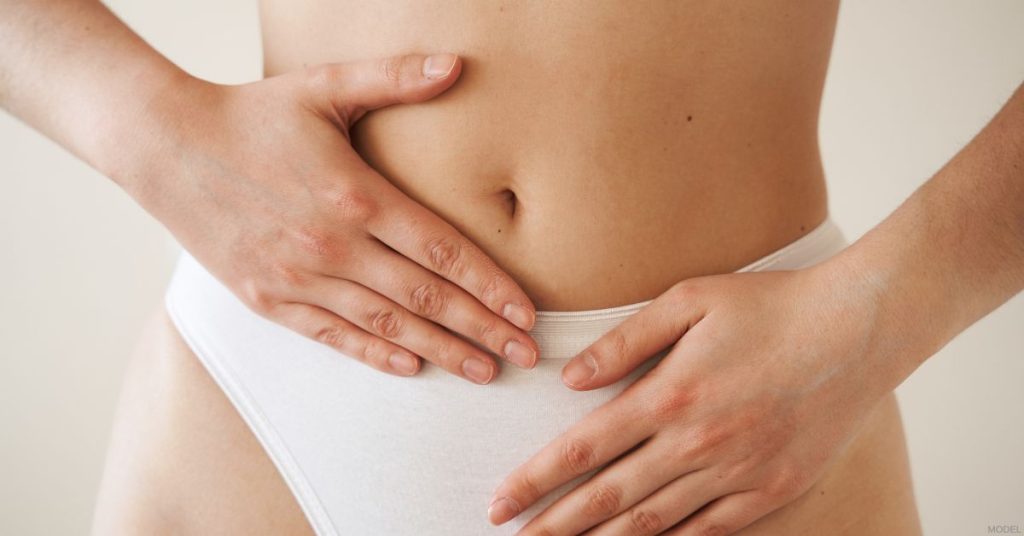
Patients considering a tummy tuck are often focused on the prospect of a slim waistline, but the belly button deserves just as much attention. As a board-certified plastic surgeon who has performed thousands of tummy tucks and body contouring procedures, I’ve found that a natural-looking navel is often what separates a good abdominoplasty result from an exceptional one.
If you’re preparing for abdominoplasty, it’s helpful to understand what happens to the belly button after tummy tuck, including placement, scarring, healing, and more.
WARNING:
This feature contains nudity. Please click OK to confirm you are at least 18 years of age and are not offended by such material.


What Happens to Your Belly Button During a Tummy Tuck?
Many tummy tuck patients are surprised to learn that the belly button stays attached to the underlying abdominal muscles throughout the procedure. It’s only the surrounding skin that’s detached, tightened, and moved.
During a full tummy tuck, I release the belly button from the overlying skin, tighten the underlying muscles, and pull the skin down and forward to remove excess tissue. I then create a new, precisely placed opening in the tightened skin and reposition the belly button through it, so its location relative to your waist and hips looks proportional and natural.
Will I Have a Scar Around My Belly Button?
In most full tummy tucks, yes, there’s a small scar encircling the navel where it’s re-inset into the tightened skin. This is separate from the longer hip-to-hip incision. I apply the same 3-dimensional thinking here that guides the rest of your surgical plan, considering how your belly button will look immediately after surgery and how it will appear as your body changes over time. In my experience, the scar typically fades and tucks into the natural shadow of the navel itself, making it far less noticeable than patients anticipate.
Can You Improve the Appearance of My Belly Button During Surgery?
Often, yes. Many patients, particularly mommy makeover or body contouring after weight loss candidates, come to me with a belly button that has become stretched, and is asymmetrical or protruding. In these cases, I perform umbilicoplasty as part of the abdominoplasty to address this directly. This procedure entails reshaping, resizing, or inverting the navel so it appears as a natural “innie” rather than a surgically altered one. This is one of the more underappreciated parts of tummy tuck planning, and it’s a detail I discuss with nearly every patient during consultation as being an integral part of the procedure.
What Does a Natural-Looking Belly Button Look Like After Surgery?
When looking at many tummy tuck pictures online, you will see many large, flat round belly buttons or a vertical slit. Neither of these looks exist in nature, and by taking a little extra time and thought, a more natural appearance can be the result. The belly button is right in the middle of your stomach, and is visible when wearing bathing suits. Creating a natural look is an essential part of the procedure.
A well-planned result shouldn’t look surgically altered. The hallmarks I aim for are:
- Proportional placement along the abdominal midline
- A natural contour with a sloped bottom portion and a more defined upper portion
- Gentle shadowing rather than a flat or stretched appearance
- A scar that’s camouflaged within the navel’s natural contours
Achieving these goals consistently comes down to surgical judgment developed over thousands of cases, not a single standardized technique applied the same way to every patient.
How Long Does It Take for the Belly Button To Settle and Heal?
Like the rest of your abdomen, the belly button moves through predictable stages of healing during a tummy tuck. Early swelling and scar redness generally improve over the first few months, with the scar continuing to soften and fade over the course of a year.
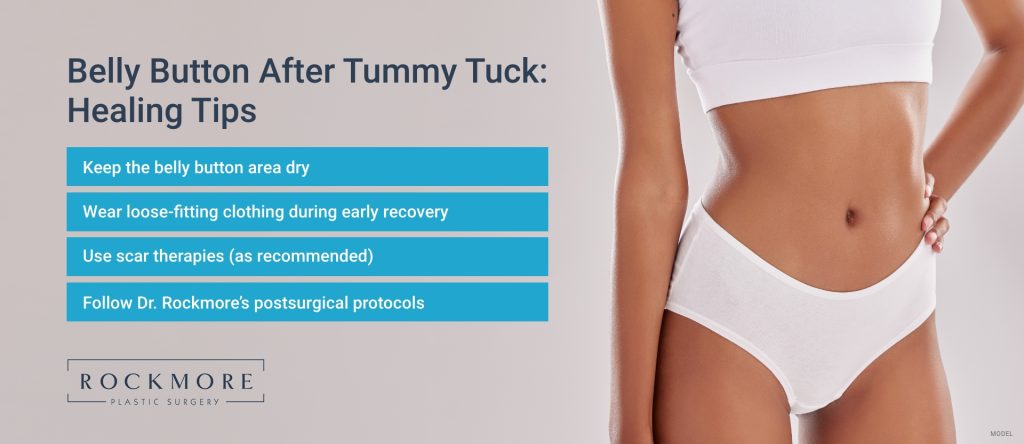
Wearing your tummy tuck compression garment as directed helps support the healing skin and can make this process more comfortable. I also recommend keeping the area protected from sun exposure while the scar matures. I follow up closely with every patient throughout recovery to monitor healing progress.
Get Started
If you’re considering a tummy tuck and want a clear, honest conversation about what your results—including your belly button—could realistically look like, I invite you to request a consultation at our Latham office by completing the online form or calling us at (518) 660-8641.
Leave a Reply