
Most patients describe rhinoplasty discomfort as mild to moderate and far less painful than they expected.
If you’re considering rhinoplasty, it’s natural to wonder how much a nose job hurts and what recovery will actually feel like. The good news is that rhinoplasty is typically associated more with facial pressure and nasal congestion than with significant pain.
Board-certified plastic surgeon Dr. Jeffrey Rockmore approaches rhinoplasty with careful planning, refined surgical technique, and detailed recovery guidance to help patients heal comfortably and confidently.
How Bad Does a Nose Job Hurt?
In practical terms, rhinoplasty pain is usually mild to moderate and temporary. Most patients describe:
- A feeling of facial pressure
- Nasal congestion (similar to a bad cold)
- Mild soreness around the nose and upper lip
- Headache or sinus pressure
Because the nose has fewer large pain-transmitting nerves than many other surgical areas, the discomfort is often less intense than patients expect. Prescription pain medication is typically only needed for a short time. Many people transition to over-the-counter options within a few days.
Dr. Rockmore’s meticulous surgical approach emphasizes precise tissue handling, helping minimize swelling and bruising. His team also provides clear postoperative instructions, so you know exactly what to expect each day of recovery.


What Rhinoplasty Recovery Typically Feels Like
If you know someone who has had a nose job, they probably said the recovery wasn’t as uncomfortable as they expected. Every patient’s recovery is unique, but here’s what you can likely expect:
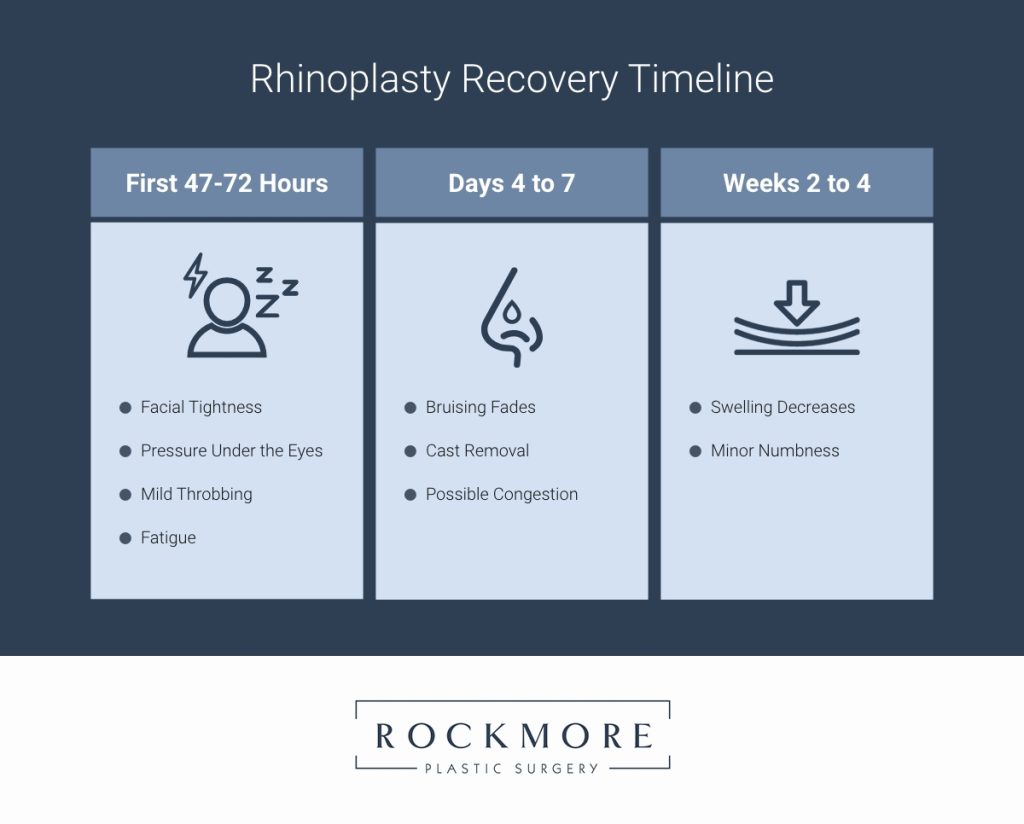
First 48 to 72 hours
Swelling and congestion are most noticeable in the first few days after surgery. You may feel:
- Facial tightness
- Pressure under the eyes
- Mild throbbing
- Fatigue
Keeping your head elevated and using cold compresses as directed helps reduce swelling. Rest is essential during this phase.
Days 4 to 7
By the end of the first week, most patients feel significantly better. Bruising begins to fade, and discomfort continues to decrease. The main complaint at this stage is usually congestion rather than pain.
If you’re wondering about rhinoplasty cast removal pain, you’ll be relieved to know that cast removal is not typically painful. It may feel slightly uncomfortable as the adhesive is loosened and the splint is lifted, but the process is brief. Many patients feel excited rather than uncomfortable when they see their new profile for the first time.
Weeks 2 to 4
Swelling continues to improve. You may still notice stiffness or numbness in the nasal tip, but these sensations are normal and temporary. The majority of noticeable swelling resolves in the first month, though subtle refinement continues over several months.
Why Do My Teeth Hurt After Rhinoplasty?
Some patients are surprised that their upper front teeth hurt after rhinoplasty. This sensation is temporary and related to shared nerve pathways in the midface.
Because the nose, upper lip, and upper teeth share sensory nerves, it’s common to experience:
- Temporary numbness in the upper lip
- Mild tooth sensitivity
- A tingling sensation near the gums
This feeling typically resolves within a few weeks as swelling subsides and nerves settle.
Managing Nose Job Pain Effectively
A comfortable recovery is part of Dr. Rockmore’s comprehensive care process. You’ll receive detailed instructions tailored to your procedure, which may include:
- Taking prescribed medication as directed
- Keeping your head elevated, even while sleeping
- Avoiding strenuous activity for several weeks
- Protecting your nose from impact
- Attending all follow-up appointments
Hydration, proper nutrition, and gentle movement, like short walks, also support circulation and healing.
It’s important to note that rhinoplasty is not a no-downtime procedure. Healing takes time. However, when patients follow instructions carefully, recovery is typically smooth and manageable.
If you’re not able to take time off to heal, a “liquid rhinoplasty” may be an option. It involves using dermal fillers to change the nose’s appearance. Its results are temporary, but a liquid rhinoplasty typically involves little to no downtime.
Schedule Your Consultation
Dr. Rockmore takes a collaborative approach, discussing your goals in detail and using advanced planning techniques to ensure your surgical plan aligns with your anatomy. This thoughtful preparation supports natural-looking results and contributes to a smoother recovery. You can request a consultation using the online form or by calling (518) 660-8641.
Leave a Reply